


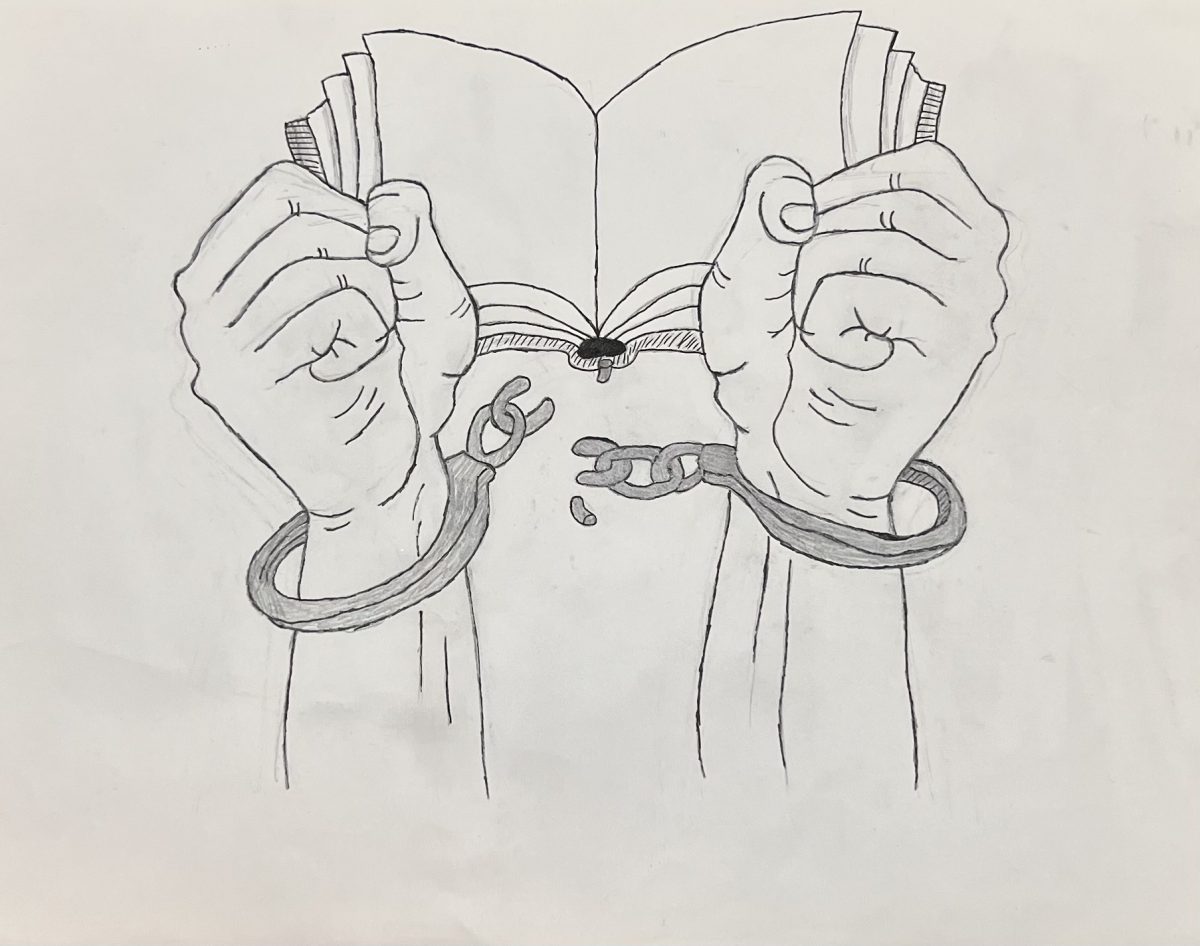


There is something almost surprising about seeing a teenager reading a book in public now. A paperback on the subway or a novel open on a park bench feels like a small interruption in the rhythm of modern life. Everyone else is scrolling, their faces lit by the glow of a screen. The reader sits there quietly, turning pages at a pace that belongs to another time. In a world that moves as fast as a thumb can swipe, reading has become the last slow act. It is not dramatic or loud, but it stands out. It feels intentional. It feels different. And in its own quiet way, it feels rebellious.
The instinct to check a phone has become so automatic that most people do not even notice when they do it. It happens in the middle of conversations, in the middle of homework, even in the middle of a thought. That reflex says something about the world teenagers are growing up in. Attention is no longer something people simply have. It is something companies fight for. It is something apps are designed to capture. It is something that gets chipped away little by little every time a notification appears. In a culture built to keep the mind constantly moving, reading stands out because it asks the mind to slow down. But reading is not old fashioned. It is not a hobby from a different era. It is one of the few activities left that requires a person to be fully present. That alone makes it feel like a form of resistance.
The Digital Era’s Grip on the Teenage Mind
The decline in attention spans is not just a rumor adults repeat. Researchers have been tracking the phenomenon for years. Research conducted by Microsoft in 2015 estimated that the average attention span at about eight seconds. Stress, lack of sleep, anxiety, and constant digital stimulation all play a part. A national survey found that more than a third of people believe their attention spans have gotten shorter because of their devices. Long term research shows that sustained attention has dropped by more than a third since the early 2000s. People now spend only a few seconds on a piece of digital content before moving on to something else.
Short form video has exacerbated the problem. In 2025, Cassidy Wilson, Columbus Ohio reporter, provides more insight on a term that has gained attention in recent years – “Tiktok Brain.” She explains that this is a problem for both adults and children, kids are saying that they like TikTok videos because they can easily skip through videos when bored. Watching fast clips can lower reading attention scores by almost a third, and the effects can last for nearly an hour. Even after a scroller puts their phone away, the mind keeps buzzing. Psychologists call this effect, attentional residue. The leftover mental noise rattling in our brains that makes it hard to fully return to a task. Reading seems a daunting mental feat not because we are lazy, but because the environment around us is designed to interrupt our focus.
The psychology underpinning our fragmented ability to pay attention is not mysterious. Our brains respond strongly to unpredictable rewards. When we scroll through short videos, we are curious to know what will appear next. The dangling “reward” of another swipe might be funny, boring, surprising, or stir our emotions. That unpredictability triggers dopamine, the chemical that makes us want to keep scrolling. Over time, our brains learn to crave the quick hit of stimulation. So scrolling feels effortless while reading feels like work. The brain has been trained to prefer speed over depth.
Our prefrontal cortex – the brain’s decision-making center – is not fully developed until age 25. Teenagers are still learning the skills needed for focus, planning, and self control, which they develop by practicing activities that require sustained attention. Reading is one of the best ways to build such discipline. But the digital world surrounding us makes it harder to practice those skills. The very years when the brain learns to concentrate are the years when concentration is most under attack.
A Long History of Reading as Resistance
Reading has not always been a simple or safe activity. Throughout history, it has been an act resisting power, emboldening freedom, and performed by those in rebellion. When the printing press was invented in the fifteenth century, reading became democratized. Previously, books were copied by hand and controlled by religious and political leaders. Once mass replication became possible, ideas spread faster than authorities could contain them. People could read for themselves (at least, the educated classes could). They could question what they had been told. They could think independently. This shift helped spark movements like the Reformation and the Enlightenment.
In the 19th century, enslaved people in the United States risked severe punishment to learn to read. Frederick Douglass wrote that “Once you learn to read, you will be forever free,” because it allowed him to understand the world beyond what he was told. Reading gave him the ability to imagine a different life. That imagination was dangerous to the people who wanted to keep him enslaved.
In the 20th century, rebels to authority circulated banned books secretly in countries ruled by strict censorship. People copied pages by hand and shared them at the risk of political persecution. Reading became a way to resist control and hold on to personal freedom. Even today, some governments restrict what people can read. They understand that reading encourages independent thought. It encourages questioning. It encourages people to see beyond the limits placed on them.
Reading has always been more than a pastime. When someone reads, they are choosing what ideas enter their thoughts. They are choosing what stories shape their understanding of the world. That choice has always been powerful.
Reading as Psychological Independence
Teenagers today grow up surrounded by influences they cannot see. Algorithms decide what videos appear, what news is shown, what trends rise, and what opinions seem popular. These systems shape what people think is normal without them even realizing it. Reading interrupts that process. It gives the mind space to think without being guided by an algorithm.
The reader chooses the pace. The reader chooses the meaning. The reader decides how deeply to engage. There is no automatic next chapter waiting to pull them forward. There is no invisible system deciding what they should see. Research shows that when students choose their own books, they feel more confident in their opinions. They think more critically. They trust their own interpretations. This mirrors the psychological process of becoming an independent person.
What Reading Builds That TikTok Cannot
- Reading strengthens deep focus. It builds the ability to stay with a thought even when it becomes challenging. A single notification can break concentration for more than twenty minutes. Books help rebuild the ability to stay present.
- Reading builds empathy. It allows someone to step into another person’s mind and understand their fears, hopes, and contradictions. Short videos move too quickly to offer that kind of depth. They show moments, not inner lives.
- Reading builds cognitive endurance. It teaches the mind to follow complex ideas and tolerate uncertainty. It teaches patience. It teaches the ability to sit with a question without needing an immediate answer.
- Reading shapes identity. Books give people language for feelings they could not name before. They challenge assumptions. They expand their imagination. They help teenagers understand themselves in a world that often tries to define them.
Why This Matters Now
Attention has become one of the most valuable resources in the world. Companies compete for it. Apps are designed to capture it. Politicians manipulate social media and algorithms to influence opinions. When our attention becomes fragmented, when we give ourselves over to our devices, we become easier to shape and manipulate.
For us teenagers, it is essential we nurture our ability to engage deeply and ponder new ideas. Our identities are still forming. Our beliefs are still developing. Our minds are still figuring out how to think deeply. Reading is a mechanism that allows us to push back against the forces that try to shape our thoughts. It is an act that allows us to build focus and patience.
In a culture that equates value with virality and likes, the act of reading remains stubbornly private, gloriously inefficient, and profoundly human.
Reading is not nostalgia. Reading is resistance. It is the last slow act.