





Walking in the halls of Millennium Brooklyn High School is a lot different this year than it was in years past. Gone are the days of MBHS students using their passing period to keep up with their Instagram feed, text their friends, or check their digital schedule. Students now keep their phones tucked away, track down their friends in the halls, and unfold their ripped, crumpled, and disintegrating paper schedules to find their next class. Why the difference? The new statewide phone ban.
In May of last year, Governor Kathy Hochul announced that all public and charter schools in the state would be phone-free with a bell-to-bell policy. This means that phones cannot be used from the first bell of the school day to the last. New York is one of fourteen states to implement some form of phone ban. Our state, however, has one of the most restrictive embargoes—the official policy mandates zero tolerance of phone use during the school day except for those students with mandated exemptions. The legislature and governor passed the law in response to concerns over how cell phones have been distracting students, shortening attention spans and altering social interactions of teens.

This idea was made clear to students during their first physical education class of the school year. Coach Friedman sat his classes down— all grades, from freshman to seniors—and told them about the 2024 Jonathan Haidt book, The Anxious Generation. The book has brought to light the connection between smartphones and the detrimental effects they have on the mental health of students. The introduction of the smart phone coincided with a rise in anxiety among young people and Haidt observes how young people have shifted away from face-to-face interactions and towards digital conversations. The book’s publication pushed many states and districts to introduce phone bans, as parents and legislators saw the benefits of removing screen time from in-school hours. Coach Friedman was moved so much by the book that he invited his students to discuss these issues on day one of the school year.
Historically, school districts set policy on how they police phone use, but within the New York City Department of Education, districts are more of a formality. The DOE has set policy and has the final say. Prior to the ban, former Chancellor Melissa Aviles-Ramos allowed schools to decide for themselves. “[W]e know a one-size-fits-all approach in a system this large is not going to work,” she explained in an interview in late August with CBS New York. Even though students attending Midwood, Laguardia, and MBHS live in the same city, each school likely has entirely different ways of handling the ban.
Some schools (even within the John Jay campus) have a phone collection system, some have purchased Yondr pouches where students stash their phones during the day and some have adopted policies allowing students to self-regulate. In the case of MBHS, students lock their phones in their lockers and keep them there until 2:20pm. But the school has a set of Yondr pouches that will be used should they be deemed necessary, according to Principal Conway. “Kids who violate the locker policy a few times will get pouches […] it’s an escalation of the policy for kids who need reminders [and] need to be held accountable,” Mr. Conway says. The reason for not giving everyone a pouch is not because of lack of resources, but the lack of people on staff to enforce the policy. Mr. Conway shared that the time and people power required to collect the phones is what prevented MBHS from instituting such a system that other schools were quick to implement.
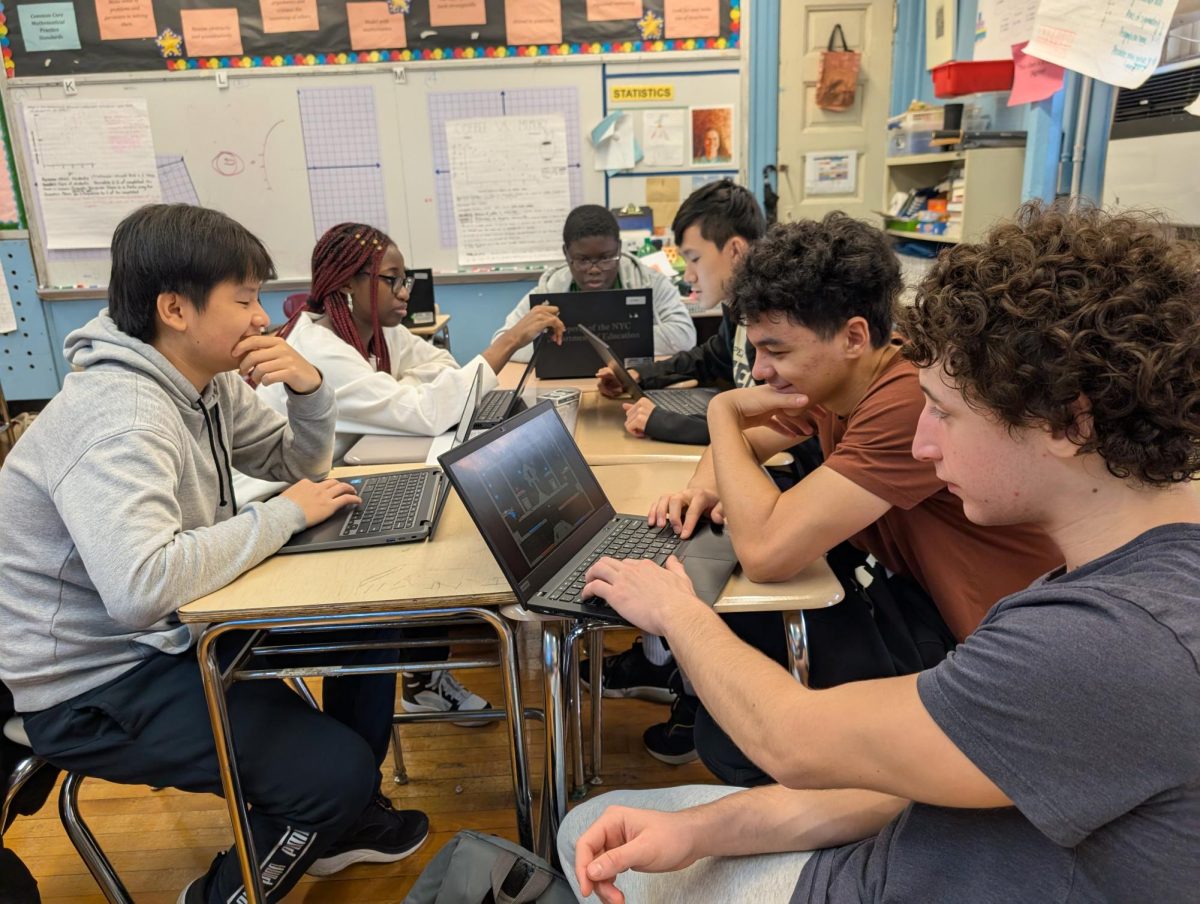
Senior Rebecca Yevdayev has strong opinions on the ban. She asserts that the ban has been more of a detriment to her social life than a benefit to her academic record. She cannot check her Jupiter and Google Classroom as easily throughout the day with her phone. While MBHS has a laptop cart in every classroom, Yevdayev notes that “laptops are not always reliable, so why go through trials and tribulations…when you could use your phone.” Also, she notes that she can no longer use lunch period to complete simple assignments and study on her phone so she considers the ban to be counterproductive for her. Though she understands that the temptation to use a phone to distract from school has been removed, she also no longer is able to use her phone as a resource for education. She has found it difficult to adapt.
Yevdayev is in the majority of MBHS students. Not all decry the ban because they are eager to do their work. While Senior Evan Eliassaint says he feels neutral about the ban and noted that his peers have been more social this year, likely as a result of the policy, he also noted it has drawbacks. “If we ever play Kahoot! in class, now we have to all grab laptops, making the laptops really slow [because of the volume of people using them]. It’s pretty inconvenient.” But do student opinions matter on this issue? Algebra II teacher Mr. Michaelson dismisses the student sentiment on the issue. “No one with any credibility could not support the cell-phone ban,” he asserts. And most teachers agree.
While the majority of students oppose the ban, there are a handful of students who support it—and no, they are not luddites. Junior Tidiane Anne shared that he has been able to learn more about his classmates, “[the] kids that used to isolate themselves with their headphones, [now] we get to hear their opinions with assignments [and] when we do seminars, the conversation just flows more.” Anne also brought up how he has gotten to know his classmates more outside of social media because they are more attentive in school. “In school [this year], everyone’s just being truly honest and nice,” he says. Tidane believes that many students secretly like the phone ban, but are scared to admit it.
And even Anne admits that despite the positives, he has faced challenges due to his lack of easy access to technology. “When I had to, for example, read aloud, it was easier for me to just pull out my phone [last year.] But a drawback now is that I have to carry a big computer around.” Though some students with learning needs may have administrator-approved exceptions, those without approve device access must learn to adapt to school life without a phone.
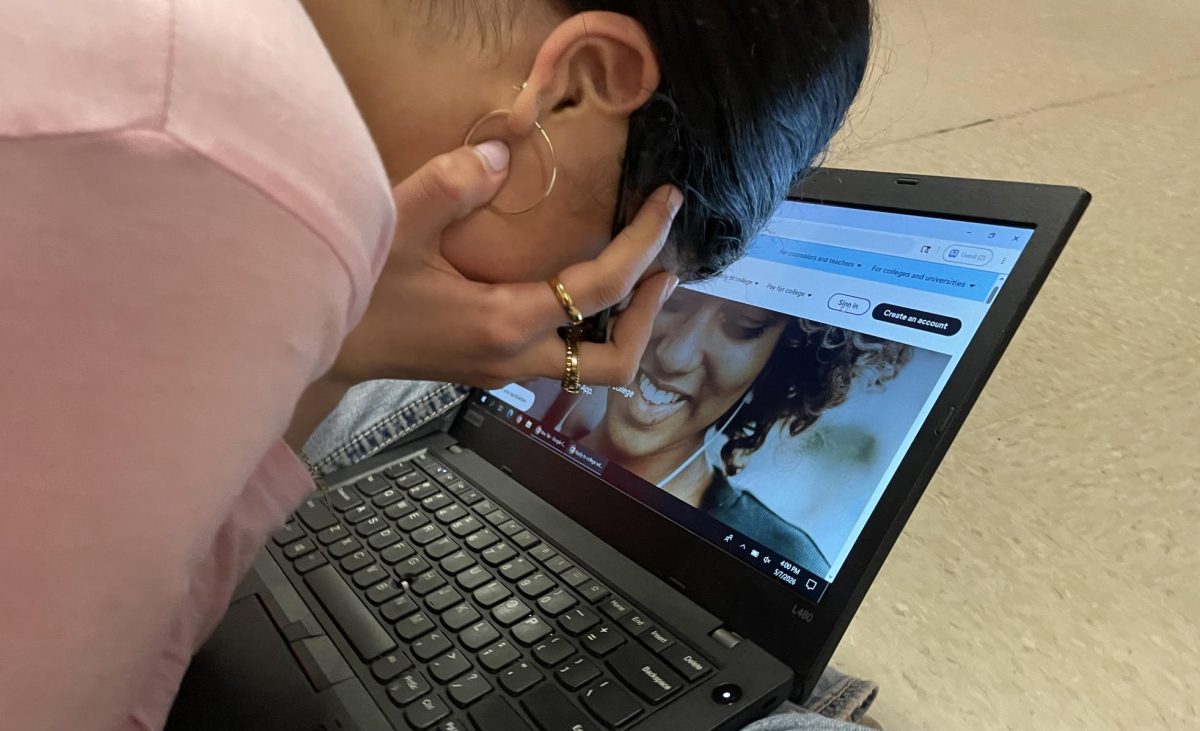
Students have also had to adapt by wearing traditional watches (smart watches are prohibited under the law as well) or learning to read the analog faces of school clocks (whose times are often incorrect). Students must now write down or remember all their passwords for college meetings and plan a place to meet up with friends for lunch instead of texting them. The question is, are the benefits of the ban worth it? The majority of students say no.
In an informal poll I conducted of 72 students (most from MBHS, all DOE students), 40 disagreed with the statement that “the positives of the phone ban outweigh the negatives.” Perhaps it is too early for us students to appreciate any sort of shift in our behaviors as a result of the ban, maybe it is too late to remove phones in a school so heavily reliant on technology, or perchance we, the anxious generation, cannot help being deprived of our phones. Only time will tell, for now, as students have to dig through their backpacks for their creased and decaying schedules in lieu of their precious devices.